
Knee Replacement Surgery in Scottsdale, AZ
Chronic knee pain shouldn't define how you live. Dr. Gough offers MAKOplasty® robotic-assisted, muscle-sparing knee replacement in Scottsdale — with smaller incisions, faster recovery, and results built to last.
Does this sound like you?
Knee pain has a way of taking over your life quietly — until one day you realize you have stopped doing things you love. If any of these feel familiar, you are not alone:
Pain
Pain climbing stairs or getting in and out of the car
Stiffness
Knee stiffness that is worst first thing in the morning
Swelling
Swelling that comes and goes throughout the day
Trouble Sleeping
Pain that wakes you up at night
Activity Limitations
Avoiding activities you used to enjoy because of knee pain
Non-surgical Treatments
Injections or physical therapy — that are no longer helping
These are common signs of cartilage breakdown in the knee. When the cartilage that cushions the joint wears away, bones begin to rub together — causing pain, inflammation, and stiffness that gets progressively worse over time.
- 8,000+ Procedures
- MAKOplasty® Robotic Precision
- Same-Day Outpatient
- Board-Certified
- Scottsdale, Arizona
Understanding Your Knee Joint
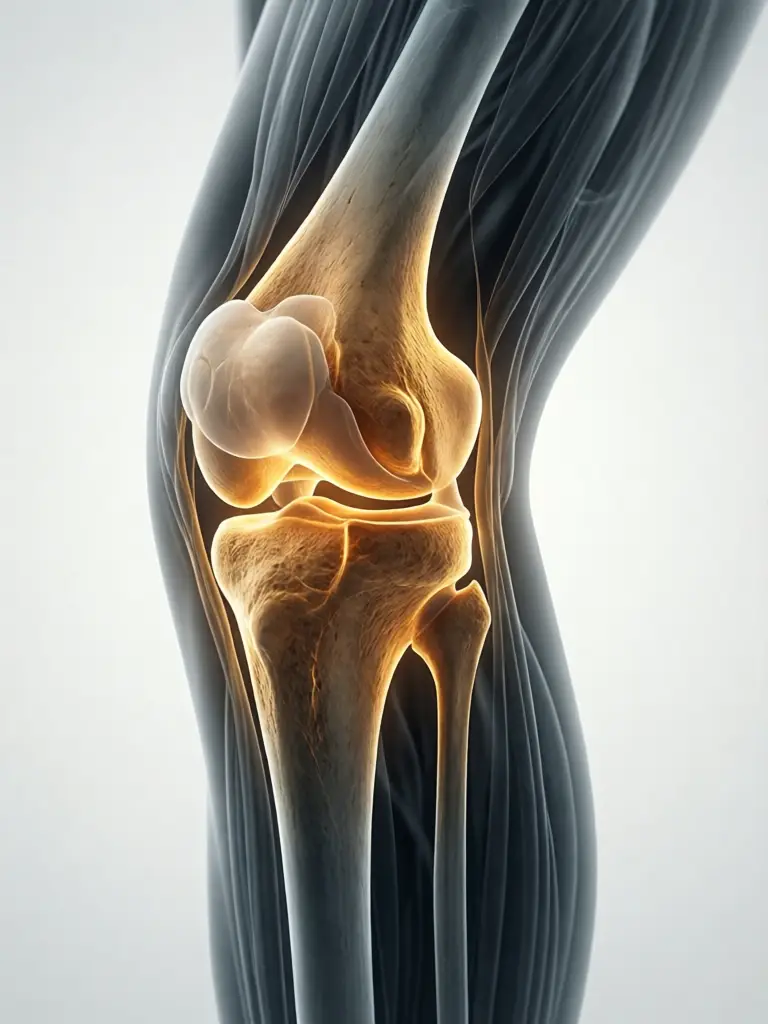
The knee is the largest joint in the body. It connects three bones:
- The femur (thigh bone)
- The tibia (shin bone)
- The patella (kneecap)
A layer of cartilage covers the ends of these bones, acting as a cushion and allowing the joint to move smoothly. Ligaments and tendons hold the joint together and provide stability.
When cartilage breaks down — due to osteoarthritis, rheumatoid arthritis, injury, or age — the joint loses its cushioning. Bones begin to rub directly against each other, causing the pain, swelling, and stiffness that knee replacement is designed to resolve.
Knee Procedures Offered
Robotic-Assisted, Total Knee Replacement
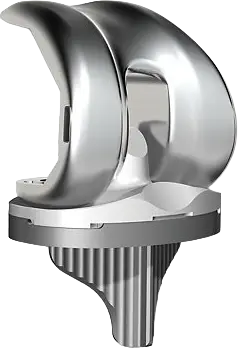
Robotic-assisted surgery that preserves your quadriceps muscle, uses a 4–6 inch incision, and gets most patients walking the same day — with results built to last 25–30 years.
Robotic Assisted Partial Knee Replacement
If your damage is confined to one part of the knee, robotic precision allows Dr. Gough to treat only what needs treatment — leaving all healthy tissue intact. Same-day home. Full recovery in 2–4 weeks.
Robotic-Assisted Revision, Total Knee Replacement
When a previous knee replacement is causing pain, instability, or reduced motion, Dr. Gough specializes in the complex revision surgery needed to restore comfort and function.
Which Procedure Is Right For You?
A consultation with Dr. Gough will include a physical examination of your knee and review of your imaging to determine the right path forward.
Robotic Assisted Partial Knee Replacement
ELITE TECHNOLOGY
What Makes Dr. Gough's Approach Different
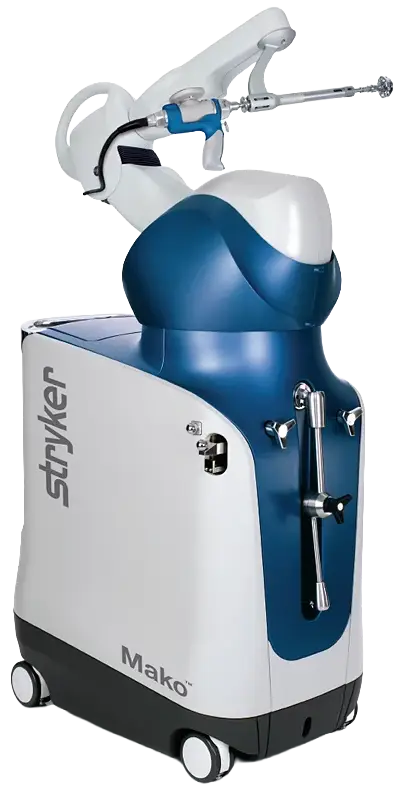
Dr. Gough uses MAKOplasty® — a robotic-assisted surgical system that allows for a level of precision that traditional surgery cannot match.
Before every procedure, a CT scan of your knee is used to create a detailed 3D digital model. Dr. Gough uses this model to plan the surgery around your exact anatomy, select the right implant, and prepare every step before making a single incision.
During surgery, the Mako robotic arm guides each movement with precision — removing only what needs to be removed and placing the implant exactly where it needs to go.
The result is better alignment, less trauma to surrounding tissue, and faster recovery.
Knee Replacement Surgery FAQs
We know you might have questions about knee replacement surgery — here are the ones we get asked the most, answered simply.
The right procedure depends on how much of your knee is damaged, the condition of your ligaments, your age, and your activity goals. Dr. Gough offers MAKOplasty® Partial Knee Replacement (for damage confined to one area), MAKOplasty® Total Knee Replacement (for widespread damage throughout the joint), and Revision Total Knee Replacement (for patients whose prior knee replacement is causing problems). During your consultation, Dr. Gough will review your imaging and examine your knee to give you a clear, personalized recommendation.
MAKOplasty® robotic-assisted knee replacement is one of the most precise and successful procedures in modern orthopaedic medicine. Dr. Gough has performed more than 8,000 hip and knee procedures since 2013 and will walk you through the specific risks, benefits, and realistic expectations for your case before any decision is made.
Recovery timelines vary by procedure. MAKOplasty® partial knee replacement patients typically achieve full recovery in 2 to 4 weeks. Total knee replacement patients generally return to full activity within 4 to 8 weeks with consistent physical therapy. Revision knee replacement takes longer depending on complexity. Dr. Gough will give you a realistic, personalized timeline during your consultation.
Body weight is a factor in candidacy and recovery, but it does not automatically disqualify anyone from surgery. Dr. Gough evaluates each patient individually. He will discuss how your weight may affect surgical risk, recovery, and implant longevity --- and help you understand all available options.
Most of Dr. Gough’s partial and total knee replacement patients go home the same day as surgery or within 24 hours. Surgery is typically performed at an outpatient surgery center for appropriate candidates. Revision knee replacement patients may need to stay 1 to 2 nights for monitoring due to the greater complexity of the procedure.
Great questions to bring to your first consultation include: Am I a candidate for partial rather than total replacement? How does MAKOplasty® robotic precision improve my outcome? What does recovery look like for someone with my activity goals? How long will my implant last? What happens if I need revision surgery in the future? Dr. Gough welcomes every question and takes time with every patient.