
DR BRANDON GOUGH | SCOTTSDALE, AZ
Partial Knee Replacement in Scottsdale, Arizona
Learn whether MAKOplasty® partial knee replacement is the right solution for your knee pain, joint damage, and recovery goals.
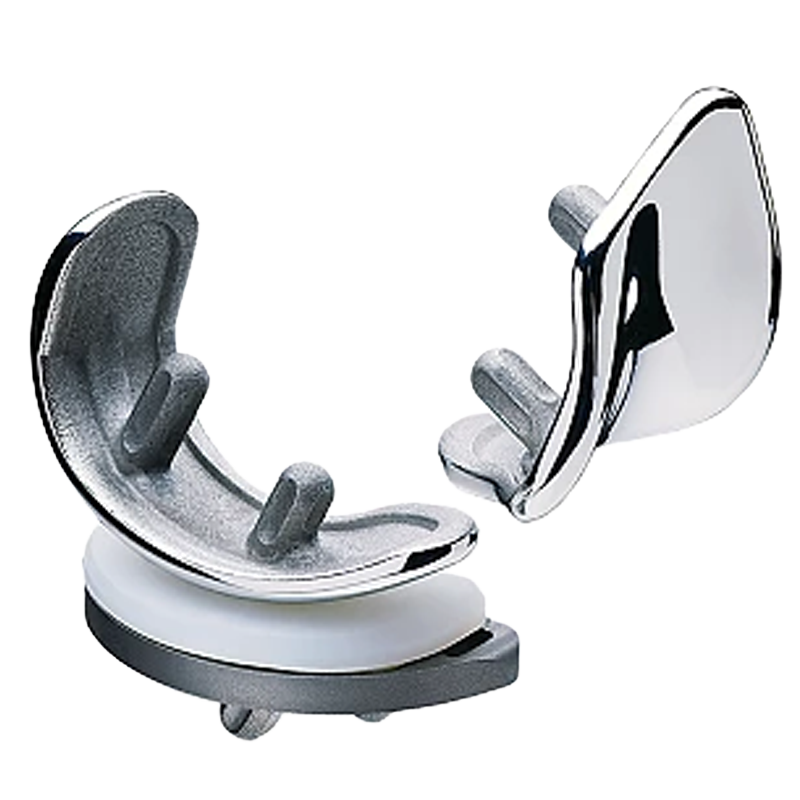
Is partial knee replacement right for you?
MAKOplasty® partial knee replacement may be the right option if:
- Your arthritis or joint damage is confined to one compartment of the knee — not the entire joint
- The ligaments in your knee are still intact and functioning
- Non-surgical treatments are no longer providing adequate relief
- You want the least invasive approach possible with the fastest recovery
Not everyone is a candidate for partial replacement. If damage has spread throughout the knee, total replacement may be the better option. Dr. Gough will review your imaging and examine your knee to give you a clear recommendation.
- MAKOplasty® Robotic Precision
- Same-Day Outpatient
- 2–4 Week Recovery
- Board-Certified Orthopaedic Surgeon
- Scottsdale, Arizona
Your Recovery, Step by Step
How MAKOplasty® Works
See how MAKOplasty® partial knee replacement uses 3D planning, robotic guidance, and precise implant placement for a more accurate fit and faster recovery.
|
|
|
|---|---|
|
STEP 1 >>> |
CT Scan & 3D Planning Before surgery, a CT scan of your knee creates a precise 3D digital model. Dr. Gough uses this model to map the exact area of damage, design a custom surgical plan, and select an implant sized to your anatomy. |
|
STEP 2 >>> |
Robotic Guidance During surgery, the Mako robotic arm guides Dr. Gough's movements with a level of precision that is not possible by hand alone. Only the damaged cartilage and bone are removed. All healthy tissue is left completely intact. |
|
STEP 3 >>> |
Custom Implant Placement The implant is precisely placed and secured using press-fit technology or medical-grade bone cement. All surrounding ligaments and tendons are carefully preserved. |
|
Results >>> |
The result is a knee that moves naturally and feels right. |
KNEE SURGERY COMPARISON
Traditional Surgery vs. Dr Gough's Approach
See Why Patients Choose Dr. Gough’s More Precise, Muscle-Sparing Hip Surgery Approach
|
|
Partial Knee Replacement
|
Total Knee Replacement
|
|---|---|---|
|
Tissue Preserved >>> |
healthy cartilage, ligaments, and bone all remai |
entire joint surface replaced Incision |
|
Size >>> |
4–6 inches |
Slightly larger |
|
Recovery Time >>> |
2–4 weeks to full recovery |
4–8 weeks |
|
Natural Feel >>> |
Proprioception (joint position sense) maintained |
Takes longer to feel natural |
|
Hospital Stay >>> |
same day for most patients |
same day or overnight |

WHY PATIENTS CHOOSE IT
Key Benefits
See why MAKOplasty® partial knee replacement can mean less pain, faster recovery, and a more natural-feeling knee.
For the right candidate, MAKOplasty® partial knee replacement offers a less invasive way to relieve knee pain while preserving more of the natural joint.
- Only the damaged area is treated — all healthy tissue remains intact • 4–6 inch incision with minimal disruption to surrounding tissue
- Go home the same day as surgery • Walk with limited assistance within hours of surgery
- Full recovery in 2 to 4 weeks for most patients
- More natural feel than total replacement because healthy tissue is preserved
- Lower risk of complications than total replacement
- If total replacement is ever needed later, it is not complicated by this procedure
WHAT TO EXPECT
Recovery After Partial Knee Replacement
See how MAKOplasty® partial knee replacement helps many patients walk within hours, go home the same day, and return to daily activities in just a few weeks.
|
|
|
|---|---|
|
Day of Surgery >>> |
Surgery takes approximately 1 hour. You will walk with limited assistance within hours. Go home the same day. |
|
Days 1–7 >>> |
Mild swelling and tenderness managed with ice and over-the-counter medication. Walking at home with a cane or walker. Physical therapy begins. |
|
Weeks 2–4 >>> |
Most patients transition off assistive devices. Return to driving. Resume daily activities. |
|
Weeks 4+ >>> |
Full recovery for most patients. Return to recreational activities including golf, walking, and light exercise. |
FREQUENTLY ASKED QUESTIONS
Partial Knee Replacement FAQs
We know you might have questions about partial knee replacement — here are the ones we get asked the most, answered simply.
Partial knee replacement treats only the damaged compartment of your knee --- leaving all healthy cartilage, bone, and ligaments completely intact. Total knee replacement resurfaces all three compartments of the joint regardless of how much is damaged. Because partial replacement preserves more of your natural knee, it is less invasive, requires a smaller incision, has a faster recovery --- typically 2 to 4 weeks compared to 4 to 8 weeks for total replacement --- and tends to feel more natural afterward. However, partial replacement is only appropriate when damage is limited to one specific area. Dr. Gough will confirm this with imaging during your consultation.
Yes --- and this is one of the most important advantages of partial over total knee replacement. When only the damaged portion is treated and all healthy tissue is preserved, the knee\'s proprioception is maintained. Proprioception is your knee\'s ability to sense its own position and movement --- it is what makes a joint feel like yours rather than a mechanical replacement. Total knee patients report excellent outcomes too, but partial knee patients consistently describe a more natural, less mechanical feel in daily movement and activity.
Having a partial knee replacement does not complicate or prevent a future total knee replacement. If your arthritis progresses over time and total replacement becomes necessary, Dr. Gough can perform that procedure without being limited by the prior partial replacement. He monitors all patients over time and will discuss any changes with you as your knee evolves. For the right candidate, starting with partial replacement gives you the best possible outcome today --- with all options still open for the future.
Most MAKOplasty® partial knee replacement patients go home the same day as surgery. Dr. Gough’s minimally invasive technique and muscle-sparing approach mean recovery begins immediately --- most patients are walking with limited assistance within hours of surgery. Same-day discharge is one of the significant practical advantages of partial over total knee replacement for the right candidate.
Recovery from MAKOplasty® partial knee replacement is faster than most patients expect. Day of surgery: walking with limited assistance, home the same day. Days 1 to 7: mild swelling and tenderness managed with ice and over-the-counter medication, walking at home with a cane or walker, physical therapy begins. Weeks 2 to 4: most patients transition off assistive devices, return to driving, resume daily activities. Weeks 4 and beyond: full recovery for most patients, return to recreational activities including golf, walking, and light exercise. Full recovery in 2 to 4 weeks is typical.
Partial knee replacement is appropriate when arthritis or damage is confined to one compartment of the knee --- not the entire joint --- and when the surrounding ligaments are still intact and functioning. If damage has spread throughout the knee, total replacement is typically the better option. The only way to know for certain is a thorough evaluation. Dr. Gough will review your imaging, examine your knee, and give you a clear recommendation with no pressure. Many patients who come in expecting to need total replacement turn out to be excellent candidates for the less invasive partial approach.