
Partial vs Total Knee Replacement in Scottsdale — Here's How Dr. Gough Decides Which One Is Right for You
★★★★★ 4.8 Google Reviews

Ready to Find Out Which Knee Replacement Is Right for You?
8,000+ Procedures
Board-Certified Orthopaedic Surgeon
MAKOplasty® Robotic-Assisted
Same-Day Outpatient Options
Scottsdale, AZ

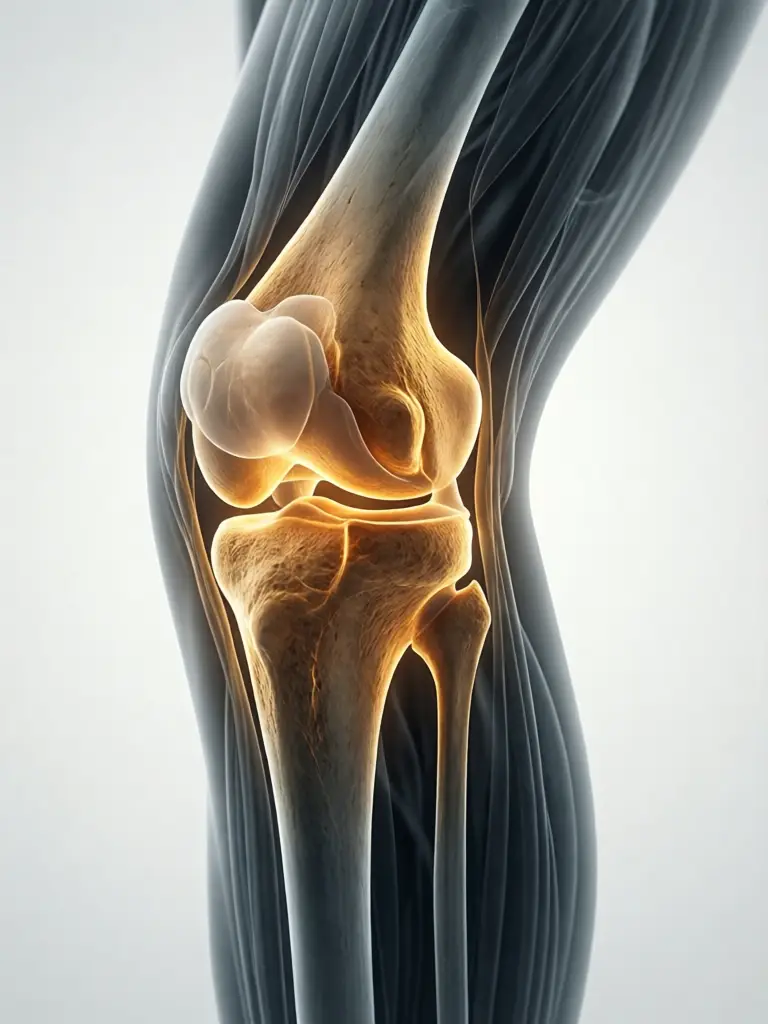
The Decision Between Partial and Total Knee Replacement Is Simpler Than Most Patients Think
It comes down to one thing — how much of your knee is damaged. Dr. Gough will answer that question directly at your consultation based on your imaging.
One of the most common questions patients bring to their first consultation with Dr. Gough is whether they need partial or total knee replacement. Many have already been told one or the other by a previous surgeon. Some have read conflicting information online. A few come in convinced they need total replacement only to find out they are strong candidates for the far less invasive partial approach. The decision is not complicated — it is determined by the extent and location of cartilage damage in your knee. If damage is confined to one compartment of the joint and your surrounding ligaments are intact, partial knee replacement resurfaces only that area while leaving everything else untouched. If damage has spread throughout all three compartments, total knee replacement is the appropriate solution. Dr. Brandon Gough uses the MAKOplasty® robotic system for both procedures. He has performed more than 8,000 hip and knee replacements since 2013 and will give you a direct, imaging-based recommendation at your consultation — not a default toward one approach over another.
Partial vs Total Knee Replacement — What Actually Differs Between the Two
Understanding the differences helps you ask better questions at your consultation. Here is exactly what sets these two procedures apart.
What Is Replaced — One Compartment vs Three
Your knee has three compartments — the medial compartment on the inner side, the lateral compartment on the outer side, and the patellofemoral compartment at the front. Partial knee replacement resurfaces only the one compartment where cartilage has worn away, leaving the other two completely intact. Total knee replacement resurfaces all three. The right choice depends entirely on where your damage is and how far it has spread.
Recovery — Faster With Partial, Still Fast With Total
Because partial knee replacement is less invasive — smaller incision, less tissue disruption, one compartment rather than three — recovery is typically faster. Most of Dr. Gough's partial knee patients achieve full activity within two to four weeks. Total knee patients follow a slightly longer timeline — most return to golf and light recreation within three to four weeks and reach full recovery between three and six months. Both are significantly faster than traditional surgery because Dr. Gough's technique avoids cutting the quadriceps muscle in both procedure
How the Knee Feels — Natural With Partial, Excellent With Total
Partial knee replacement patients frequently describe their knee as feeling like their own — because it largely is. The healthy cartilage, ligaments, and bone in the undamaged compartments are completely preserved, including the knee's ability to sense its own position and movement. Total knee patients also report excellent outcomes and natural feel, particularly with robotic placement — but the preservation of native tissue in partial replacement produces a distinctly natural sensation that many patients describe as the biggest surprise of their recovery.
The MAKOplasty® System Is Used for Both — With Equal Precision
Dr. Gough uses the MAKOplasty® robotic system for partial and total knee replacement without distinction. For partial replacement, robotic precision is particularly critical — the boundary between damaged and healthy tissue must be respected exactly, and the robotic arm physically enforces that boundary during surgery. For total replacement, robotic placement ensures the implant is positioned with the accuracy that determines how naturally the knee moves and how long the implant lasts.
I came in expecting to need a total replacement and left with a partial. The recovery was so much faster than I imagined. Six weeks out I forgot I had surgery.
Partial vs Total Knee Replacement — The Questions That Matter Most
These are the questions patients ask most when trying to understand which procedure is right for them. Here are direct answers based on how Dr. Gough approaches this decision.
How does Dr. Gough decide between partial and total knee replacement?
The decision is based on your imaging and a thorough physical examination of your knee. Dr. Gough reviews your X-rays and any available MRI to assess where cartilage damage exists and how far it has spread. He examines your ligaments — particularly the ACL — because intact ligaments are a prerequisite for partial replacement. He looks at the overall alignment of your knee and the condition of the surrounding bone. Based on all of this he gives you a direct recommendation. He does not have a preference for one procedure over the other — he recommends what your knee actually requires.
Another surgeon told me I need total knee replacement. Could I actually need only a partial?
Possibly — and it happens more often than patients expect. Partial knee replacement is underutilized nationally because it requires more precise patient selection and a surgeon experienced in both procedures who can make the distinction accurately. Some surgeons default to total replacement because it addresses all compartments regardless of which ones are damaged, simplifying the decision. Dr. Gough performs both procedures at high volume and has no reason to default to either. If another surgeon has recommended total replacement, a second opinion consultation with Dr. Gough costs nothing and will tell you definitively whether partial replacement is an option for your knee.
What are the advantages of partial knee replacement over total?
For patients who are candidates, partial knee replacement offers several meaningful advantages. The procedure is less invasive with a smaller incision and less tissue disruption. Recovery is faster — most patients reach full activity in two to four weeks compared to three to six months for traditional total replacement. The knee feels more natural because healthy tissue, cartilage, and ligaments in the undamaged compartments are completely preserved. And because less bone is removed, a future conversion to total knee replacement remains straightforward if it becomes necessary years down the road. The tradeoff is that not everyone is a candidate — damage must be confined to one compartment.
What are the advantages of total knee replacement when it's the right choice?
When damage has spread throughout the knee, total replacement is the more durable and comprehensive solution. Partial replacement of a knee with widespread damage would leave damaged tissue in place and produce poor outcomes. Total knee replacement addresses the entire joint surface — all three compartments — and when placed with MAKOplasty® robotic precision, produces excellent outcomes with a natural feel, long implant life, and a recovery timeline that is still dramatically faster than traditional surgery. Dr. Gough’s total knee patients walk the same day, go home the same day, and most are back to golf and recreation within three to four weeks.
How long do partial and total knee replacements last?
Modern knee implants placed with robotic precision are designed to last 25 to 30 years. The single biggest predictor of implant longevity is placement accuracy — an implant that is positioned correctly wears more evenly and is less likely to fail early. This is why MAKOplasty® robotic placement matters for both procedures. Partial knee implants have a long and well-studied track record. For patients who do require conversion from partial to total replacement years down the road, that conversion is typically straightforward because less bone was removed in the original procedure.
Is the recovery different between partial and total knee replacement?
Yes — partial knee replacement recovery is generally faster. Most of Dr. Gough’s partial knee patients reach full activity in two to four weeks. Total knee patients typically return to golf and light recreation in three to four weeks and reach full recovery between three and six months. Both timelines are significantly faster than traditional surgery because Dr. Gough’s technique avoids cutting the quadriceps muscle in both procedures — which is the primary source of extended recovery time in conventional knee replacement. Same-day walking and same-day discharge apply to both.
What should I do next if I'm not sure which procedure I need?
Schedule a consultation with Dr. Gough. He will review your imaging, examine your knee, and tell you directly which procedure is appropriate — partial, total, or in some cases neither if conservative options remain viable. You do not need to arrive with a decision made. The consultation is specifically designed to give you that answer based on your individual anatomy and damage pattern. Call or text 602-359-3088 or submit the form on this page. Most consultations are scheduled within one week and Dr. Gough’s team will verify your insurance before your visit.

Dr. Brandon Gough, M.D.
Board-Certified Orthopaedic Surgeon · Scottsdale, Arizona
Dr. Brandon Gough is a board-certified orthopaedic surgeon in Scottsdale, Arizona specializing in hip and knee replacement. He has performed more than 8,000 joint replacements since 2013 and is a Stryker-certified MAKOplasty® surgeon.





Ready to Find Out Which Knee Replacement Is Right for You?
8,000+
Hip & Knee Procedures
Same Day
Home After Surgery
25-30yr
Year Implant Life
★★★★★ 4.8 Google Reviews
Ready to Schedule Your Consultation?
Complete the form and Dr. Gough’s team will be in touch. We look forward to getting you back on track.
Content on this website is for general informational purposes only and should not be considered medical advice. Each patient’s condition, treatment plan, and results are unique. Patient testimonials reflect individual experiences and are not a guarantee of similar outcomes.