
Bone-on-Bone Knee in Scottsdale, AZ — You Don't Have to Keep Living With This Pain
★★★★★ 4.8 Google Reviews

Ready to Find Out If You're a Candidate for Knee Replacement?
8,000+ Procedures
Board-Certified Orthopaedic Surgeon
MAKOplasty® Robotic-Assisted
Same-Day Outpatient Options
Scottsdale, AZ

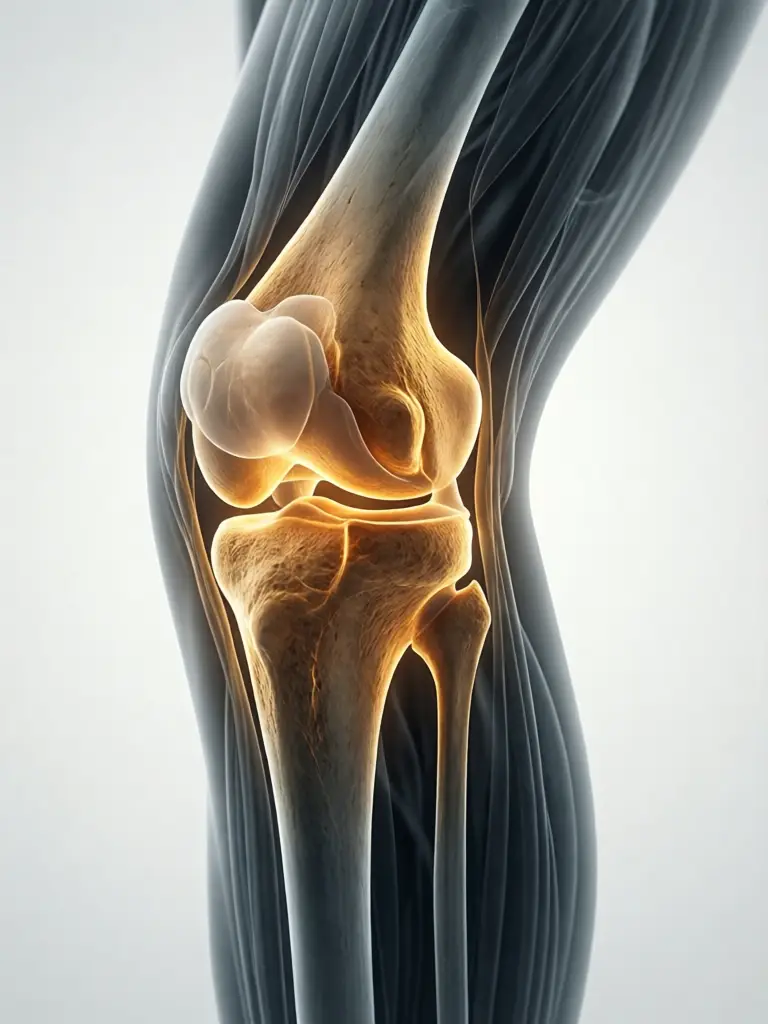
What "Bone on Bone" Actually Means — and What You Can Do About It
Hearing those words from your doctor can feel overwhelming. Here is what is actually happening in your knee — and why modern surgery produces results that most patients describe as life-changing.
Bone-on-bone knee is what happens when the cartilage that cushions your knee joint has worn away completely. Cartilage is the smooth tissue that covers the ends of your bones and allows your knee to move without friction. When it breaks down — through osteoarthritis, age, or prior injury — there is nothing left to absorb the impact of every step. Bone grinds against bone. That is the source of the pain, stiffness, and swelling that gets worse over time and stops responding to injections and physical therapy. The good news is that bone-on-bone knee in Scottsdale, AZ is one of the most treatable conditions in orthopaedic medicine. Dr. Brandon Gough has performed more than 8,000 hip and knee replacements since 2013 using the MAKOplasty® robotic system — a technology that allows him to place your new joint with a level of precision that traditional surgery cannot match. Most patients walk the same day. Most go home the same day. Most are back to the life they had before the pain within weeks.
Why Dr. Gough's Approach Produces Better Results for Bone-on-Bone Knees
Not all knee replacements are the same. The technique and technology your surgeon uses directly determines how well you recover — and how long your new knee lasts.
A 3D Model of Your Knee Built Before Surgery Begins
Before Dr. Gough makes a single incision, a CT scan of your knee creates a precise 3D digital model of your specific joint. He uses this model to plan every detail of your surgery — the exact implant size, position, and angle — built around your anatomy, not a standard template. The result is a knee replacement designed specifically for you.
The Muscle That Powers Your Recovery Is Never Cut
Traditional knee replacement cuts through the quadriceps muscle to reach the joint. That muscle damage is the primary reason traditional recovery takes so long. Dr. Gough's muscle-sparing technique works around the quadriceps entirely — which means dramatically less pain, faster return to walking, and a recovery measured in weeks rather than months.
Walk the Same Day. Go Home the Same Day.
Because Dr. Gough's technique causes significantly less trauma to surrounding tissue, most patients are walking within hours of surgery and discharged the same day. There is no mandatory hospital stay. Most are driving within two weeks and back to golf, hiking, and recreational activity within three to four weeks.
Implants That Last 25 to 30 Years
I went back to work full time within two weeks after surgery. I don't know why I waited so long. My life is pain and limp free now.
I was nervous about the whole thing — but I was walking the same afternoon. Eight weeks later I was back on the golf course. I didn't think that was possible.
Questions Patients With Bone-on-Bone Knees Ask Most
If your doctor has told you your knee is bone on bone, these are the questions that matter most before your first consultation with Dr. Gough.
My doctor told me my knee is bone on bone. Does that mean I need surgery?
Not necessarily — but it usually means non-surgical options like injections and physical therapy are no longer able to provide lasting relief. Bone-on-bone means the cartilage that cushions your joint is gone. Cartilage does not grow back. Once you reach this stage, treatments that work on the cartilage — injections, therapy, anti-inflammatories — are managing symptoms rather than solving the underlying problem. Knee replacement surgery replaces the damaged joint surfaces with implants designed to move like healthy cartilage. Whether surgery is the right next step for you depends on your level of pain, how it affects your daily life, and your overall health. Dr. Gough will review your imaging and give you a direct recommendation at your consultation.
How do I know if I need partial or total knee replacement?
The answer depends on how much of your knee is affected. If bone-on-bone damage is confined to one compartment of your knee and your surrounding ligaments are intact, partial knee replacement may be appropriate — it resurfaces only the damaged area while leaving the healthy portions of your knee untouched. If damage has spread throughout the joint, total knee replacement is typically the better solution. Many patients who come in expecting to need total replacement turn out to be candidates for the less invasive partial approach. Dr. Gough will confirm which procedure is right for you based on your imaging and a thorough examination at your consultation.
Is it safe to wait before having knee replacement surgery?
For many patients, waiting is reasonable — especially if pain is still manageable and daily function is maintained. However, waiting too long can create complications. As bone-on-bone arthritis progresses, surrounding muscles weaken from disuse, bone loss can occur, and the alignment of the knee can shift — all of which make surgery more complex and recovery more difficult. There is no universal right time. Dr. Gough will give you an honest assessment of where your knee is today and what waiting is likely to mean for your outcome. Most patients who waited longer than they should have said the same thing afterward — they wished they had come in sooner.
How long does recovery take after knee replacement for a bone-on-bone knee?
Most of Dr. Gough’s robotic knee patients follow this timeline. Day of surgery — walking with assistance, home the same day. Week one to two — transitioning off a walker, beginning driving, managing discomfort with Tylenol rather than narcotics. Week three to four — back to light recreational activity including golf for most patients. Three to six months — full recovery where the knee feels completely natural. This timeline is significantly faster than traditional knee replacement recovery because Dr. Gough’s muscle-sparing technique avoids cutting through the quadriceps, which is the primary source of extended recovery time in traditional surgery.
Will knee replacement stop the bone-on-bone pain completely?
Yes — for the vast majority of patients, knee replacement completely eliminates the bone-on-bone pain because it removes and replaces the damaged joint surfaces that are causing it. The grinding, aching, and stiffness that come from bone rubbing against bone are resolved when the damaged surfaces are replaced with smooth implants designed to move like healthy cartilage. Most patients describe the relief as dramatic and immediate — waking from surgery with the bone-on-bone pain already gone. The recovery process involves some post-surgical soreness as the tissue heals, but this is fundamentally different from the arthritis pain patients experienced before surgery.
Are there risks I should know about before deciding on knee replacement?
Knee replacement is one of the most studied and consistently successful procedures in orthopaedic medicine. As with any surgical procedure there are risks — including infection, blood clots, implant loosening over time, and the small possibility of needing revision surgery in the future. Dr. Gough’s minimally invasive technique reduces several of these risks by limiting trauma to surrounding tissue, minimizing incision size, and enabling same-day discharge which reduces hospital-acquired infection risk. Dr. Gough will walk you through every risk specific to your health history and anatomy at your consultation so you can make a fully informed decision.
How do I get started with Dr. Gough for a bone-on-bone knee?
The first step is a consultation. You can call or text 602-359-3088 or submit the form on this page. Dr. Gough personally meets with every patient at every stage of care. At your consultation he will review your imaging, examine your knee, explain your options in plain language, and give you a direct recommendation. If you have recent X-rays or an MRI, bring them. If you don’t, Dr. Gough’s team can arrange imaging. Most consultations are scheduled within one week. There is no pressure to make a decision at your first visit — Dr. Gough’s goal is to give you the information you need to make the right choice for your life.
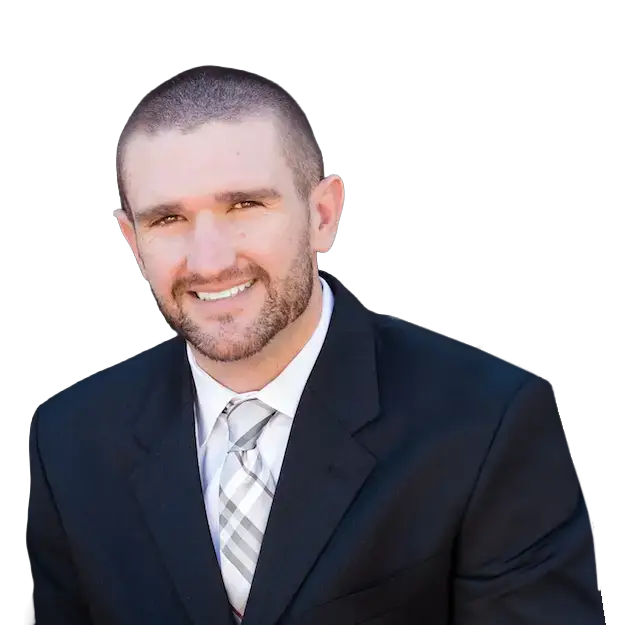
Dr. Brandon Gough, M.D.
Board-Certified Orthopaedic Surgeon · Scottsdale, Arizona
Dr. Brandon Gough is a board-certified orthopaedic surgeon in Scottsdale, Arizona specializing in hip and knee replacement. He has performed more than 8,000 joint replacements since 2013 and is a Stryker-certified MAKOplasty® surgeon.





Ready to Find Out If You're a Candidate for Knee Replacement?
8,000+
Hip & Knee Procedures
Same Day
Home After Surgery
25-30yr
Year Implant Life
★★★★★ 4.8 Google Reviews
Ready to Schedule Your Consultation?
Complete the form and Dr. Gough’s team will be in touch. We look forward to getting you back on track.
Content on this website is for general informational purposes only and should not be considered medical advice. Each patient’s condition, treatment plan, and results are unique. Patient testimonials reflect individual experiences and are not a guarantee of similar outcomes.