
Knee Replacement in Paradise Valley, Arizona — Back to Golf and Camelback in Weeks, Not Months
★★★★★ 4.8 Google Reviews
Talk to Dr. Gough's Team
- 8,000+ Procedures
- Robotic-Assisted Precision
- Board-Certified Orthopaedic Surgeon
- Same-Day Outpatient Options
- Scottsdale, Arizona

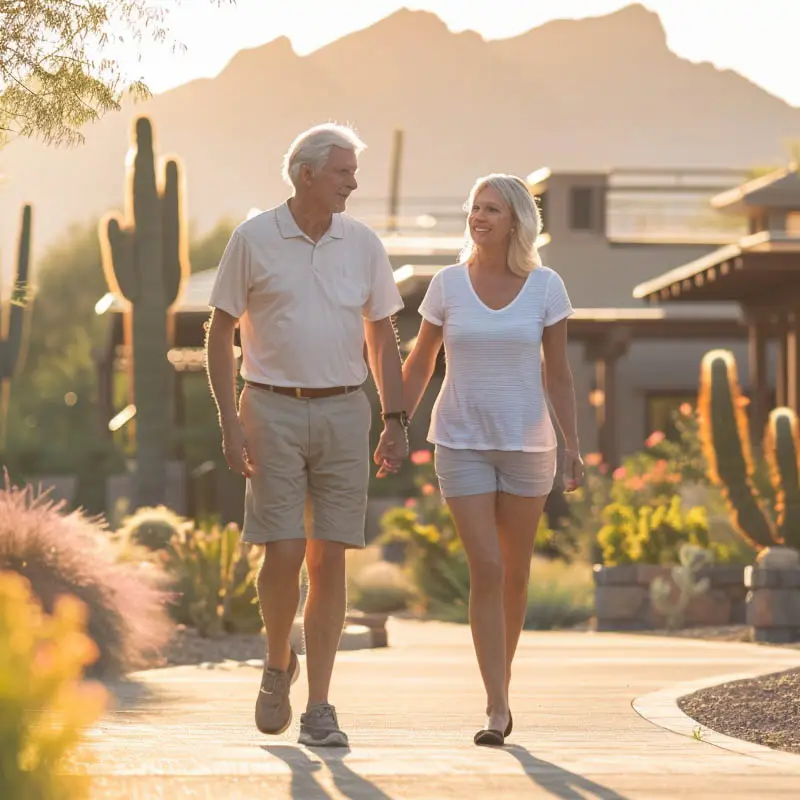
The Technique That Gets Paradise Valley Patients Back to Golf, Hiking, and Resort Living
Life in Paradise Valley moves at a demanding pace. The Camelback Golf Club demands a full rotation through the swing. Echo Canyon demands steady, forceful knee flexion on every step. Even a resort day at the Sanctuary or Montelucia involves more walking and standing than knee pain allows. When the knee gives out, the entire rhythm of life in Paradise Valley quietly collapses around it.
Traditional total knee replacement takes months to recover from — primarily because the procedure cuts through the quadriceps muscle, the largest and most powerful muscle group surrounding the knee. Rebuilding that muscle after surgery is what makes conventional recovery so slow. Dr. Gough’s approach is built on a different foundation entirely. Using the MAKOplasty® robotic system by Stryker, he performs a quad-sparing technique that works around the quadriceps muscle rather than through it. The muscle is never cut. The robotic arm executes a pre-planned surgical approach with sub-millimeter precision, guided by a 3D digital model of your specific knee anatomy created from a CT scan before surgery.
Because the quadriceps is intact from the moment surgery ends, most of Dr. Gough’s Paradise Valley patients are standing and walking before they leave. They go home the same afternoon. By week two, most are driving. By week three to four, many are back on the golf course — not because they pushed through recovery, but because the technique left the muscle that makes walking and swinging possible completely undisturbed. For Paradise Valley residents who have spent decades building a life around physical excellence and access to the best the desert has to offer, this is the knee replacement that matches the life they intend to keep.
Knee Pain Is Rewriting Your Life in Paradise Valley. It Doesn't Have To.
- Cutting your round short at the Camelback Golf Club because your knee can't handle 18 holes anymore
- Avoiding Echo Canyon and the Cholla trail entirely — hikes you have been doing for years — because the descent on a painful knee is no longer manageable
- Getting in and out of a low car or a golf cart has become a production that draws attention you don't want
- Declining resort events and dinner reservations at Elements and Lon's because you know standing and walking through the evening will cost you the next two days
- Injections and physical therapy have stopped providing real relief and you are being told surgery is the next step — but you have heard the recovery is months long

Traditional Knee Replacement vs. Dr. Gough's MAKOplasty® Approach
| Traditional | Dr. Gough | |
|---|---|---|
| Incision | 10–12 inches | 4–6 inches |
| Muscle handling | Cut or detached | Fully preserved |
| Walking | Days after surgery | Same day |
| Recovery | 6–12 weeks | Weeks, not months |
| Restrictions | Long post-op list | None |
| Hospital stay | 2–4 days | Same day / 24 hrs |
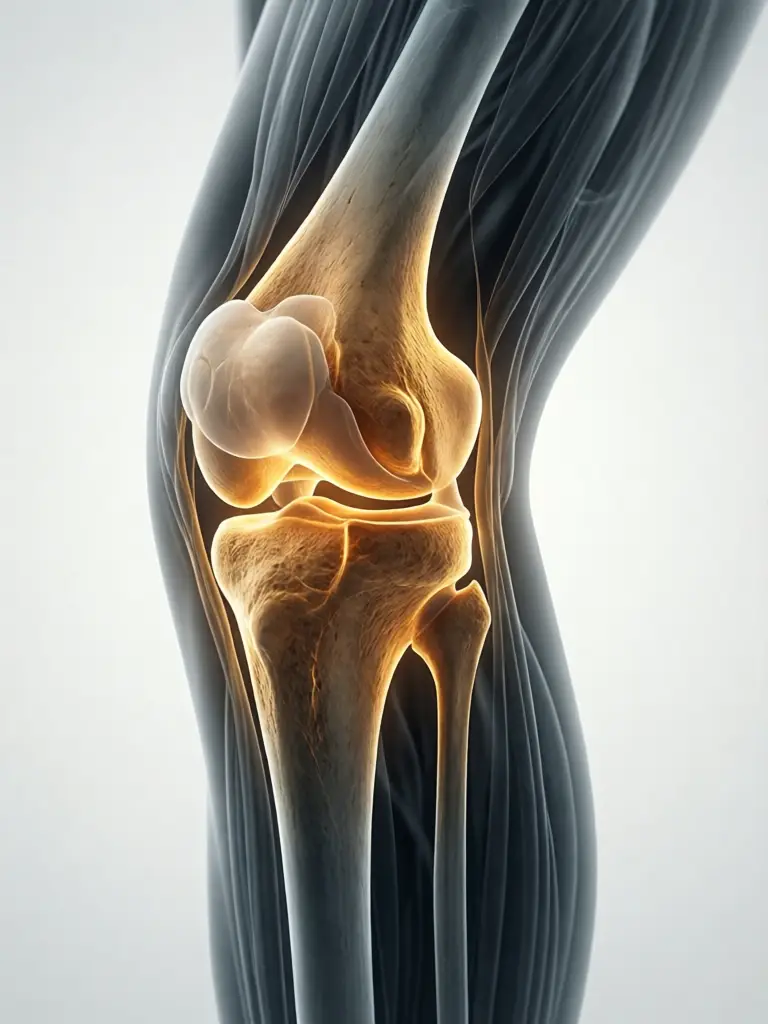
MAKOplasty® Robotic Knee Replacement — Precision Built for Paradise Valley's Active Lifestyle
Before surgery, a CT scan of your knee is used to create a detailed 3D digital model of your specific joint. Dr. Gough uses this model to plan every element of the procedure — the exact implant position, the amount of bone to be removed, and how the new joint will interact with your specific anatomy — before a single incision is made. During surgery, the Mako robotic arm guides each movement within pre-planned boundaries, ensuring the surgical plan is executed with sub-millimeter accuracy. Only the damaged tissue is removed. All healthy bone, cartilage, and surrounding tissue is left completely intact.
The result is a joint that fits your anatomy precisely — not a standard off-the-shelf size — placed with a level of accuracy that freehand surgery cannot reliably achieve. Combined with the quad-sparing technique that leaves the quadriceps completely undisturbed, the procedure causes significantly less trauma than traditional knee replacement. Less trauma means less post-operative pain, less swelling, faster stability, and a recovery that begins on the same day as surgery. Most patients manage post-surgical discomfort with Tylenol and Celebrex — not narcotics. The implants used are made from durable, biocompatible materials designed to last 25 to 30 years or more under the demands of an active lifestyle. For Paradise Valley residents who spend significant time on their feet, on the course, and on the trail, longevity is not a minor consideration — it is the point.
What Knee Replacement Recovery Looks Like for Paradise Valley Patients
The recovery timeline for Dr. Gough’s Paradise Valley knee patients consistently surprises them. On the day of surgery, most patients walk with assistance before leaving and go home that afternoon. In the first one to two weeks, they transition off assistive devices, begin driving, and manage discomfort with over-the-counter medication. By week three to four, the majority of patients are back on the golf course — a milestone that takes three to six months with traditional knee replacement.
For those who hike Camelback regularly, most return to lighter trail activity within four to six weeks and the full Echo Canyon route within eight to twelve weeks. Resort activity — walking the grounds of the Sanctuary, evenings at Lon’s at the Hermosa, social events at the Paradise Valley Country Club — is typically comfortable within two to three weeks for most patients. Full recovery, where the knee feels completely natural and strong under all conditions, typically occurs between three and six months for total knee patients. Partial knee replacement patients — those whose damage is confined to one compartment — often achieve full recovery in as little as two to four weeks. Dr. Gough will confirm at your consultation which procedure is appropriate for your specific anatomy and degree of damage.

After years of knee pain, I finally feel like myself again. I was back on the golf course in three weeks. I wish I hadn’t waited so long.
Meet Dr. Brandon Gough, M.D.
Dr. Brandon Gough is a board-certified orthopaedic surgeon and a leader in minimally invasive and robotic-assisted hip and knee replacement.
Dr. Brandon Gough is a board-certified orthopaedic surgeon based in Scottsdale, Arizona. He specializes in hip and knee reconstruction and has performed over 8,000 procedures since 2013.
He is one of a select group of surgeons in the country trained in the Direct Superior approach to hip replacement — a technique that eliminates post-surgery restrictions and dramatically reduces recovery time. He is also a past consultant and educator for Stryker Orthopaedics, training surgeons from around the world in minimally invasive joint replacement techniques.
Beyond the operating room, Dr. Gough volunteers with Magis Clinic, Madonna School, Habitat for Humanity, and Sienna St. Francis Clinic. He believes that exceptional surgical care and genuine compassion go hand in hand.
- American Board of Orthopaedic Surgeons (ABOS)
- American Medical Association (AMA)
- American Academy of Orthopaedic Surgeons (AAOS)
- American College of Physicians (ACP)



Knee Replacement Questions From Paradise Valley Patients
How soon can I return to golf at the Camelback Golf Club after knee replacement?
Most of Dr. Gough’s total knee replacement patients return to golf within three to four weeks of surgery. This timeline is possible because the quad-sparing technique leaves the quadriceps muscle completely intact — the muscle that powers the golf swing, stabilizes the stance, and allows you to walk 18 holes is never damaged during surgery. Partial knee replacement patients often return to golf even sooner, sometimes within two to three weeks. Dr. Gough will give you a personalized activity plan based on your procedure and recovery progress, including a specific clearance for golf and other activities that matter to your daily life in Paradise Valley.
Can I hike Camelback Mountain again after knee replacement?
Yes — and it is a realistic goal for most patients. Lighter hiking on gentler terrain is typically appropriate within four to six weeks. The full Echo Canyon route — which is more demanding on the knee due to its steep, rocky descent — is typically cleared between eight and twelve weeks for most patients. Because Dr. Gough’s MAKOplasty® technique places the implant with robotic precision and leaves surrounding tissue intact, the knee is structurally capable of the range of motion and load-bearing demands of trail hiking. Your specific clearance will be based on your procedure, your imaging, and how your recovery progresses. Many of Dr. Gough’s patients are back hiking Camelback within two to three months of surgery.
Is robotic knee replacement better than traditional knee replacement?
For most patients, yes — in measurable ways. Studies consistently show that robotically placed knee implants are positioned more accurately than manually placed ones, and more accurate placement means the implant wears more evenly, feels more natural during activity, and is designed to last longer. The MAKOplasty® system also allows Dr. Gough to execute a pre-planned surgical approach with sub-millimeter precision, removing only the damaged tissue and leaving all healthy bone and cartilage intact. For active patients in Paradise Valley who expect to spend decades on the golf course, on the trail, and on their feet, the combination of robotic accuracy and the quad-sparing technique produces outcomes that traditional freehand surgery cannot consistently replicate.
Will I need to stay in the hospital overnight after knee replacement?
Most of Dr. Gough’s primary knee replacement patients go home the same day as surgery. There is no mandatory overnight stay. Same-day discharge is possible because the quad-sparing technique causes significantly less trauma to surrounding tissue than traditional approaches — patients are stable, mobile, and ready to leave within hours. Dr. Gough performs procedures at Aloe Surgical Center and Abrazo Scottsdale Campus, both equipped for same-day joint replacement. Whether a patient requires an overnight stay depends on overall health profile and how they respond post-surgery. Dr. Gough’s team will give you clear expectations at your consultation so there are no surprises on the day of your procedure.
Ready to Get Back to Golf, Camelback, and the Life You Have Built in Paradise Valley?
Dr. Gough personally reviews every patient’s imaging and gives you a direct, honest assessment of whether partial or total knee replacement is the right approach — and a realistic recovery timeline built around the activities that define your life in Paradise Valley. Most consultations are available within one week. Call or text 602-359-3088 or complete the form to schedule your consultation at his Scottsdale practice, just minutes from Paradise Valley.
Talk to Dr. Gough's Team
Content on this website is for general informational purposes only and should not be considered medical advice. Each patient’s condition, treatment plan, and results are unique. Patient testimonials reflect individual experiences and are not a guarantee of similar outcomes.